



SiPhox At-Home Blood Test Kit – Hormone, Cholesterol & Wellness Panel
SiPhox At-Home Blood Test Kit – Hormone, Cholesterol & Wellness Panel is backordered and will ship as soon as it is back in stock.
Shipping & Returns
Shipping & Returns
Returns are accepted within 30 days for unopened, unused items in their original packaging. Customers are responsible for return shipping.
Please note that some items, including select medical and diagnostic products, are final sale and not eligible for return.
SiPhox At-Home Blood Test Kit – Hormone, Cholesterol & Wellness Panel is backordered and will ship as soon as it is back in stock.
Description
Description
One small finger-prick. 20+ lab-grade biomarkers. A complete look at your heart, hormones, metabolism, inflammation, and more — without a clinic, a fasting-room wait, or an appointment you keep putting off. Collect at home, drop it in any mailbox, and read your results on a private, secure dashboard within days.
- ✓At-home blood test covering 20+ key health markers
- ✓Heart, hormones, metabolism, inflammation, vitamins & kidney function in one panel
- ✓CLIA-certified lab processing with secure online results
- ✓Simple finger-prick collection — no appointment required
- ✓Many markers a standard physical never checks — SiPhox includes them
- ✓Re-test anytime to track your trends over the months
More than your annual physical. A typical check-up covers a handful of basics. This panel goes deeper — into the hormones, advanced cholesterol particles, inflammation, and kidney markers that quietly shape your long-term health but rarely make it onto a routine lab order.
How it works
- 1 Collect. Use the included lancet to take a small finger-prick sample at home — no fasting clinic, no appointment.
- 2 Return. Seal your sample and drop it in any mailbox using the prepaid return label.
- 3 Analyze. Your sample is processed and reviewed for accuracy in a CLIA-certified lab.
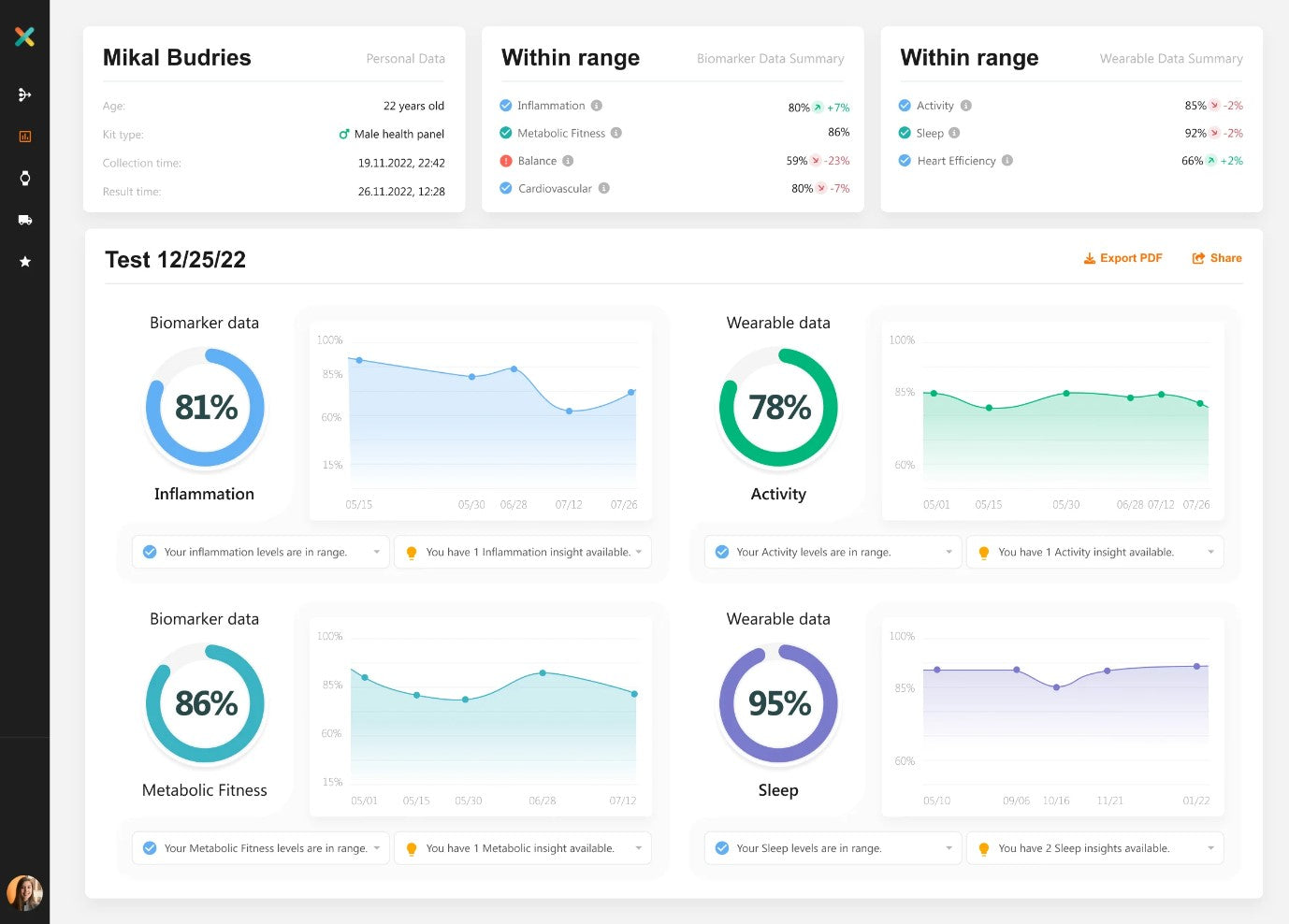
- 4 View. Read your results and trend graphs on your secure, private SiPhox dashboard — usually within a few days.
What this panel measures
Tap any marker to see what it tells you and the lifestyle factors that move it. Markers tagged Not in a standard physical are extras most routine check-ups skip.
Heart & Cholesterol
HDL Cholesterol
Often called “good” cholesterol, HDL-C helps remove excess cholesterol from your bloodstream and carry it to the liver for clearance. It helps protect your arteries from plaque buildup linked to heart attack and stroke, and influences insulin sensitivity and inflammation.
LDL Cholesterol
The “bad” cholesterol that can build up in artery walls and form plaques. Over time this narrows and hardens arteries (atherosclerosis), raising the risk of heart attack, stroke, and other cardiovascular disease.
Calculated Total Cholesterol Not in a standard physical
The overall amount of cholesterol in your blood, including both LDL-C (bad) and HDL-C (good). High total cholesterol can drive plaque buildup in your arteries and raise your risk of heart disease and stroke.
VLDL Cholesterol (Calculated) Not in a standard physical
VLDL carries triglycerides through the bloodstream and is considered a cardiovascular risk marker. Elevated VLDL can contribute to plaque buildup in arteries and raise heart disease risk.
Triglycerides
A type of fat in your blood and an important signal of heart and metabolic health. High levels raise the risk of heart disease, stroke, and pancreatitis, and are often tied to obesity, type 2 diabetes, and insulin resistance.
Apolipoprotein A1 (ApoA1) Not in a standard physical
The main protein in HDL-C particles, central to transporting and clearing cholesterol. It’s considered the most informative marker for “good” cholesterol and is used to assess cardiovascular disease risk.
Apolipoprotein B (ApoB) Not in a standard physical
The atherogenic particle that transports “bad” cholesterol and contributes to arterial plaque. Research shows ApoB is a more accurate predictor of cardiovascular events like heart attack than LDL-C alone, making it a valuable risk marker.
Cardiovascular Risk Ratios
ApoB : ApoA1 Ratio Not in a standard physical
A highly valuable ratio for detecting atherogenic (plaque-forming) risk. The lower the ApoB:ApoA1 ratio, the lower the risk.
Total Cholesterol : HDL Ratio Not in a standard physical
Compares your total cholesterol to your “good” HDL-C. A lower ratio is better — it means more HDL-C relative to total cholesterol, so your body clears excess cholesterol more effectively and builds less arterial plaque.
Triglycerides : HDL Ratio Not in a standard physical
A strong indicator of both heart disease risk and insulin resistance. A higher ratio means more blood fats relative to protective HDL-C — linked to arterial plaque and to the metabolic dysfunction behind type 2 diabetes.
LDL-C : HDL-C Ratio Not in a standard physical
Comparing “bad” LDL-C against “good” HDL-C gives a sharper read on heart risk than total cholesterol alone. A lower LDL-C:HDL-C ratio generally signals better heart health and lower risk.
LDL-C : ApoB Ratio Not in a standard physical
Because every atherogenic particle carries one ApoB molecule, this ratio hints at LDL particle size and density. A lower ratio can signal more small, dense LDL particles — more strongly tied to cardiovascular risk than larger particles, even at the same LDL-C level.
Metabolic & Blood Sugar
Hemoglobin A1c (HbA1c)
Reflects your average blood sugar over the past 2–3 months and is used to diagnose and monitor diabetes. Levels consistently above 5.6% may warrant a conversation with your physician.
Estimated Average Glucose (eAG) Not in a standard physical
Translates your HbA1c into an estimate of your average blood glucose over time, giving an easy-to-read picture of glycemic control and metabolic health — especially useful for monitoring diabetes management.
Inflammation
High-Sensitivity CRP (hs-CRP) Not in a standard physical
Measures low-grade inflammation in the body. Chronic low-level inflammation is linked to cardiovascular disease and metabolic disorders — elevated hs-CRP is associated with higher risk of heart attack, stroke, insulin resistance, and type 2 diabetes.
Homocysteine (HCY) Not in a standard physical
An amino acid normally broken down by vitamins B6, B12, and folate. High levels can signal greater cardiovascular risk (heart attack and stroke) and may point to deficiencies in those essential vitamins.
Hormones & Stress
Cortisol Not in a standard physical
Your primary stress hormone, made by the adrenal glands. It helps regulate metabolism, inflammation, and blood sugar. Abnormally high cortisol can signal chronic stress or Cushing’s syndrome; abnormally low levels can point to adrenal insufficiency.
Thyroid Stimulating Hormone (TSH) Not in a standard physical
Produced by the pituitary gland to regulate your thyroid hormones (T3 and T4), which govern metabolism and energy. High TSH can indicate an underactive thyroid (fatigue, weight gain, low mood); low TSH can indicate an overactive thyroid (weight loss, anxiety, rapid heartbeat).
♂ Included in the men’s panel
Total Testosterone (Men) Not in a standard physical
The key male hormone behind muscle mass, bone density, red blood cell production, mood, libido, and sperm production. Low testosterone can cause fatigue, reduced muscle, low libido, erectile dysfunction, and mood changes; very high levels can also need medical attention.
DHEA-S (Men) Not in a standard physical
An adrenal hormone that acts as a precursor to estrogen and testosterone, and helps regulate metabolism, immune function, and the stress response. Abnormal DHEA-S can point to adrenal disorders or chronic stress.
Testosterone : Cortisol Ratio (Men) Not in a standard physical
Balances testosterone (muscle growth and energy) against cortisol (stress and tissue breakdown). A high ratio favors an anabolic, recovery-ready state; a low ratio can signal overtraining, stress, or insufficient recovery — leading to fatigue and reduced performance.
♀ Included in the women’s panel
Follicle-Stimulating Hormone (FSH) (Women) Not in a standard physical
A key reproductive hormone. In women, FSH regulates the menstrual cycle and egg development, offering insight into fertility, conditions like PCOS, and menopausal status.
Estradiol (Sensitive) (Women) Not in a standard physical
A key hormone for both women and men. In women it regulates the menstrual cycle, reproductive system, and overall hormonal balance; in men it supports bone density, libido, and sperm production. Measuring estradiol helps assess reproductive health, diagnose conditions like PCOS or menopause, and evaluate bone health and hormone balance — and abnormal levels can also affect cardiovascular health and mood.
Vitamins & Minerals
25-(OH) Vitamin D Not in a standard physical
The best marker of your vitamin D status — essential for bone strength, immune function, and overall well-being. Low levels can mean bone problems, weakened immunity, and higher chronic-disease risk; very high levels can cause toxicity.
Ferritin Not in a standard physical
The protein that stores iron, making it a key marker of your iron levels (it also rises with inflammation). Low ferritin can mean iron deficiency — anemia, fatigue, weakened immunity; high ferritin can suggest iron overload or chronic inflammation.
Kidney Function
Cystatin C Not in a standard physical
A protein filtered out of the blood by your kidneys, and a reliable indicator of kidney function. High levels can flag reduced function or early-stage kidney disease — catching it early helps prevent further damage.
What’s in the box
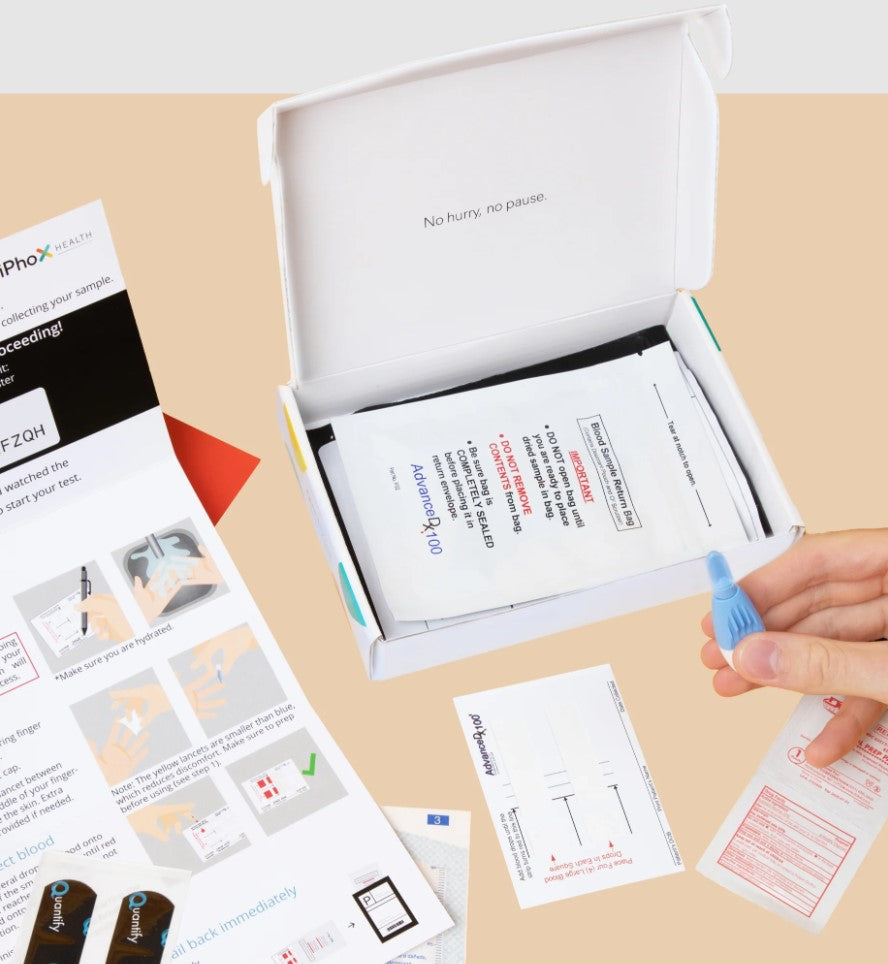
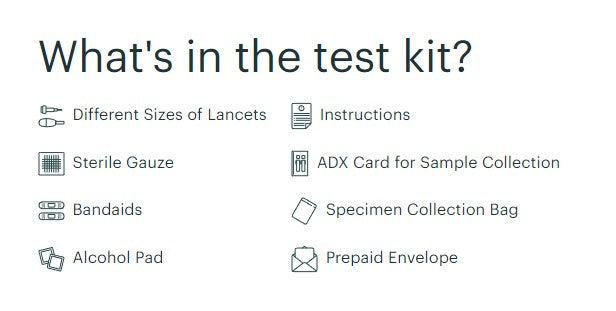
- ✓Easy-to-follow instruction manual
- ✓2 deep lancets + 2 shallow lancets
- ✓Collection test sheet and bandages
- ✓Return bag, prepaid label, and mailing envelope
Private by design. Your results are viewable only on your secure SiPhox dashboard — with clear ranges and trend graphs that make each number easy to understand.
Track over time. Re-test whenever you like to watch your trends move with the changes you make to diet, exercise, sleep, and supplements.
After purchase, you’ll receive a follow-up email with digital setup instructions and next steps.
Backed by SiPhox Health — a leader in at-home diagnostic innovation.
This test is intended for wellness and informational purposes and is not a substitute for professional medical advice, diagnosis, or treatment. Reference ranges are general guidance — always discuss your results with a qualified healthcare provider. Panel contents may vary by sex; some markers are calculated values.


